Find out what your business knows.
Most founder-led businesses don't have a software problem.
They have an operating knowledge problem.Work waits for the person who knows the exception. Senior people answer questions the business has already answered. Quotes get rebuilt. Context gets rechecked. The owner steps in because explaining the decision feels slower than making it.The problem usually isn't software. It's that the knowledge, judgment, and operating logic the business depends on is scattered across inboxes, spreadsheets, software, and a handful of experienced people.If one of those disappeared tomorrow,
how much of that intelligence would still belong to the business?That's the gap I help close.
I work with founder-led industrial businesses, especially oilfield service, specialized contracting, and equipment companies with 5 to 50 employees across Alberta, Saskatchewan, and northern British Columbia.WHO IS THIS FORYou might be here because...You're an owner preparing for an exit or succession. You want the value of your business to survive due diligence.orYou're an owner staying for another twenty years, and you want a stronger business. You want fewer repeated questions, fewer rebuilt quotes, cleaner processes, and less dependence on individual people.
Business Intelligence Ownership.
Knowing what your business knows, where it lives, and what stays when the people, the tools, or the platforms change.
I find the operating knowledge your business depends on, map where it lives, and structure the intelligence inside it so your company can own it, use it, and carry it forward.
Start with the Scorecard
16 questions. 10 minutes.
Find out where your business stands;
Owner, Tenant with equity, or Tenant,
and what it would cost you if things changed tomorrow.
WHAT HAPPENS NEXT
Discover.
I map what your business knows, where it lives, and what's at risk.Design.
I recommend what gets structured, automated, or stays human.Deliver.
You get it in formats you own, working without me in the room.Most businesses start AI projects by asking what AI should they use. I start by asking what the business actually knows. Until that's clear, automation is built on assumptions.Learn more...
If the tool, person, or platform you rely on changed tomorrow, what business intelligence would still belong to the company?
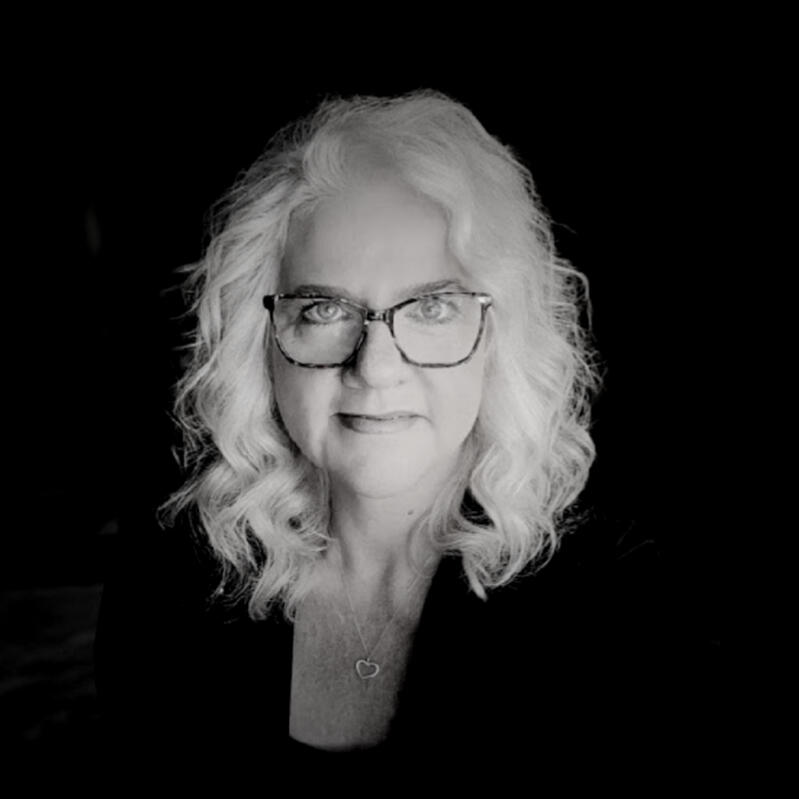
Meet Cynthia
Every chapter of my career follows the same instinct: spot what's breaking down, build what fixes it, and leave the system running long after I've stepped away.Today, I bring that operating instinct to
Business Intelligence Ownership and AI.
I've worked across high-volume corporate travel operations including Oil & Gas client programs, financial services, real estate investing and marketing, and with executive teams inside a globally distributed technology company.The environments changed. The pattern did not.Information lived in different places. Context sat with a few experienced people. The work moved because someone knew who to ask, what exception mattered, or where the real answer was hiding.I learned to find the operating logic underneath the work, give it structure, and build systems teams could carry forward.
I sit between the operation and the technology.
I help leadership decide what knowledge needs to be captured, what process needs to improve, what should be automated, and where AI actually belongs.I define the operating problem, shape the scope, and hold the direction of the work. When a build needs deeper technical capability, I bring the right specialists into the work and stay involved to make sure the technology serves the operation it was built for.
"She turns noise into signal.”“Cynthia builds for repeatability, not just for the moment. The systems she creates are designed to outlast her direct involvement.”“A true force multiplier.”Full Letter of Recommendation available from a former
VP of a Global Commerce platform.
Why Fractional CAIO?
CAIO usually means Chief AI Officer.I think about the role a little differently.In my work, AI is not the primary asset.
The knowledge, logic, judgment, and context inside your operations are.
That is the business intelligence the AI and automation depend on.Sometimes the next move is better process.Sometimes it is automation.Sometimes AI belongs in the workflow.Sometimes human judgment is the asset worth preserving.
The point is to make that choice on purpose.That is where fractional CAIO support fits.You get part-time executive guidance for the decisions that sit between your operations and AI, without creating a full-time executive role before the business needs one.
THE AI LANDSCAPE IS CHANGING.
THE OPERATING QUESTION IS NOT.
Frontier AI is getting more capable.Governments and institutions are investing in sovereign AI.Local AI is making it possible to run more useful workloads on infrastructure a business controls.Different scale. Same operating question.At the business level, that question starts with the intelligence underneath the technology.What should your business own, and what are you comfortable renting?The answer will be different for every company and every workflow.That is why I start before the AI decision, with the business intelligence your operation already depends on.Own what matters. Rent what makes sense. Keep the decision reversible.
What I believe
Principles over Policies
A business adapts when its logic is captured, not just its rules.Policies tell people what to do. Principles explain why. When the situation changes, captured
logic lets the team adapt without starting over from scratch.Ownership over Dependency
Business intelligence compounds when the business controls the loop.A rented platform can store your work, shape your workflows, and learn from your inputs. That
builds dependency. Ownership gives you control over the knowledge, the logic, and the outputs.
That builds an asset.Judgment over Automation
Not everything that can be automated should be.Automation works when the decision is understood and the work is ready. When human judgment is what makes the work better, I preserve it deliberately instead of designing it out of the business.
CAIOFactor is Client Zero
I am building CAIOFactor from the same position I ask clients to take.My own operating knowledge is being captured, structured, and tested against the architecture I advise toward. I document what works, what changes, and where an original assumption needs to move.The practice is the first operating case.That keeps the advice grounded in the same question I ask clients:If the tool, person, or platform you rely on changed tomorrow, what business intelligence would still belong to the company?
Start with the Scorecard.
The Business Intelligence Ownership Scorecard
16 questions. 10 minutes.
Your Scorecard result will be sent by email.
A plain-language read on where your operating knowledge actually lives, and what walks out the door when people, business tools, or platforms change.
THE BUSINESS INTELLIGENCE OWNERSHIP AUDIT
Find out what your business knows, where that knowledge lives, and what to do about it.
Is work progress waiting on you or on the one person who knows how that job actually gets quoted?Your shop supervisor / team manager is acting as the search engine.
The crew asks the same question they asked last month.
A quote gets rebuilt because nobody could find what was done last time.
A job goes out wrong because the context was sitting in someone's inbox.None of that shows up as a line on your P&L, but all of it costs you.These look like separate problems but usually they are one problem.
The business intelligence your operation runs on is scattered, and some of it only exists in people's heads and / or in platforms you don't control.The Audit finds it.
Fifteen business days, one team's operating context.I map where the knowledge lives, what the work depends on, where that dependency is costing you, and what should be captured, structured, improved, automated, or deliberately left alone.Most audits tell you what is wrong.
This one leaves you with six things you own and what to do next.Fixed fee: $5,000 CAD.
Delivered in 15 business days.
Six deliverables you own.
Ends in a live debrief with your findings and a roadmap in writing.No retainer. The Audit stands on its own.Built for founder-led industrial and field services businesses, 5 to 50 people, operating in Alberta, Saskatchewan, and northern British Columbia.
What you get
| Deliverable | Description |
|---|---|
| 1. Business Intelligence Ownership Scorecard | A deeper assessment of how well your business captures, shares, protects, and carries forward the operating knowledge it depends on. |
| 2. Knowledge Location Map | A clear view of where critical operating knowledge lives across your people, business tools, files, and systems. |
| 3. Operating Knowledge Gap Map | A map of the knowledge your team relies on but cannot consistently find, share, or carry forward, and the operating problems those gaps create. |
| 4. Tool & Platform Dependency Review | A review of what goes into your key tools, what comes out, what remains usable outside each platform, and where the business has limited ability to walk away. |
| 5. AI & Automation Readiness Review | An honest assessment of which workflows are ready for automation, which need a stronger knowledge foundation first, and where human judgment should stay in the work. |
| 6. 90-Day Roadmap | A prioritized recommendation showing what to protect, capture, structure, improve, or automate first, what can wait, and what not to touch yet. |
The Audit ends in a live debrief, with your findings and roadmap in writing to keep.
WHERE THE AUDIT FITSThe Audit is the Discover phase.
Your 90-Day Roadmap is my Design recommendation: what should be captured, structured, automated, or deliberately kept human.Deliver begins only if you choose to move forward with implementation.If you act on the roadmap:
1) I build out the roadmap
2) Your team builds it
3) I bring in a specialist for a defined piece and keep it tied to the operating problem it was meant to solve.None of these paths are decided in advance.What Deliver looks like depends on what Discover finds and what you are actually trying to build toward.[ Read more about how I work → #about ]
If the tool, person, or platform you rely on changed tomorrow, what business intelligence would still belong to the company?
QUESTIONS I GET ASKED
What is a fractional CAIO?A fractional CAIO is a part-time senior operator who owns the decisions that sit between your operations and AI. CAIO usually means Chief AI Officer.
In my work, the A also stands for Asset, because the AI is not the asset. The knowledge, logic, judgment, and context inside your operations are. You get executive-level guidance on those decisions without creating a full-time executive role before the business needs one.
Is that the same as a fractional COO or a chief of staff?No, though the posture is similar.
A fractional COO owns the running of the operation day to day.
A chief of staff integrates people and workstreams for a leader.
I integrate the intelligence and the tools: what your business knows, where that knowledge lives, and what should be captured, structured, automated, or deliberately kept human.
When should a founder-led business bring someone in for this?When the work starts waiting on people instead of on process.
Senior hands answering questions the business has answered before. Quotes rebuilt from scratch, context rechecked, the owner stepping in because explaining the decision feels slower than making it.
It also comes up around a specific event: a partner buyout, a key departure or a near miss, a succession conversation, or a platform that just changed its price or its owner.
What does the Business Intelligence Ownership Audit include?Six deliverables, all of them yours to keep.
A Business Intelligence Ownership Scorecard.
A Knowledge Location Map showing where critical operating knowledge lives across your people, tools, files, and systems.
An Operating Knowledge Gap Map.
A Tool and Platform Dependency Review.
An AI and Automation Readiness Review.
A 90-Day Roadmap that says what to protect, capture, structure, improve, or automate first, what can wait, and what not to touch yet.
It ends in a live debrief with everything in writing.
What does it cost and how long does it take?$5,000 CAD, fixed. Fifteen business days from start to debrief.
One price, no tiers, no retainer attached. Anything materially broader than the standard Audit gets scoped separately.
Where do you work?Alberta first, then Saskatchewan, then northern British Columbia.
I am based in Sylvan Lake, in central Alberta.
Your head office can be anywhere, Canadian or American.
What matters is where the operation actually runs, because that is where the knowledge is and that is where I have to look.
Who is this not for?Pre-revenue startups and businesses in survival mode, this is preparation, not rescue. Committee-run organizations where no single owner can say yes. Businesses where regulated legal, clinical, or financial compliance risk is the central problem. And anyone who wants a build without a diagnosis.
"Just organize our files" and "just build us a chatbot" produce expensive mistakes without a map first.
Do you sell AI tools or software?No. I do not resell.
What happens when the work is done?You keep it. Everything I produce is handed over in formats you own and can use without me in the room. Every deliverable ships with four things: a checkpoint so you can tell whether it is working as intended, a measure so you know how, a safety net for when a human needs to step in, and a known path for what changes next and what it costs to change it.
I build things you can trust will run without me.
Book Cynthia
Grounded Truth